What to Do After a Car Accident in California: 24-Hour Guide
By Freddie Ledesma, Owner, World Class Collision | Updated October 29, 2026
Quick Answer: After a car accident in California, get to safety and call 911 if anyone is hurt. Exchange driver and insurance information, take photos, and report any injury crash to police or CHP within 24 hours. Tell your insurer promptly, file a DMV SR-1 within 10 days when required, and choose your own body shop.
Key Takeaways
Safety first: call 911 for any injury, and move out of traffic only if it's safe to do so.
California law requires drivers to stop and exchange name, address, driver's license number, VIN, and insurance information (Vehicle Code 16025).
Injury or fatal crashes must be reported in writing to the CHP or city police within 24 hours, unless an officer already took a report (Vehicle Code 20008).
File an SR-1 with the DMV within 10 days if anyone was hurt or property damage was over $1,000 (Vehicle Code 16000).
Your insurance company can't require you to use a specific repair shop. The choice is yours (Insurance Code 758.5).
Knowing what to do after a car accident in California protects your health, your driving privilege, and your insurance claim. The first 24 hours are when most mistakes happen: drivers forget to take photos, say too much to an adjuster, or let someone else decide where their car gets fixed. My team and I have helped drivers across Simi Valley and Moorpark through every kind of crash, from parking lot dings to freeway rear-enders. Here's the plain-English checklist we give our own customers, with the California rules behind each step.
What should I do right after a car accident in California?
Stay calm, check for injuries, and call 911 if anyone is hurt. Then work through this list before you leave the scene:
Check everyone for injuries. Call 911 if anyone is hurt or the scene is dangerous.
Turn on your hazard lights. If no one is hurt and the cars can be moved, pull out of traffic to a safe spot.
Stop and stay. Leaving the scene of a crash, even a minor one, can be a crime in California.
Exchange information with every driver involved: name and address, driver's license number, vehicle identification number (VIN), the registered owner's address, and insurance company and policy number (Vehicle Code 16025).
Photograph everything: all vehicles from several angles, license plates, close-ups of the damage, skid marks, traffic signs, road conditions, and the other driver's license and insurance card.
Get the names and phone numbers of any witnesses.
If you hit a parked car or other property and can't find the owner, leave a note with your name and address in a visible place and report it to police or CHP (Vehicle Code 20002).
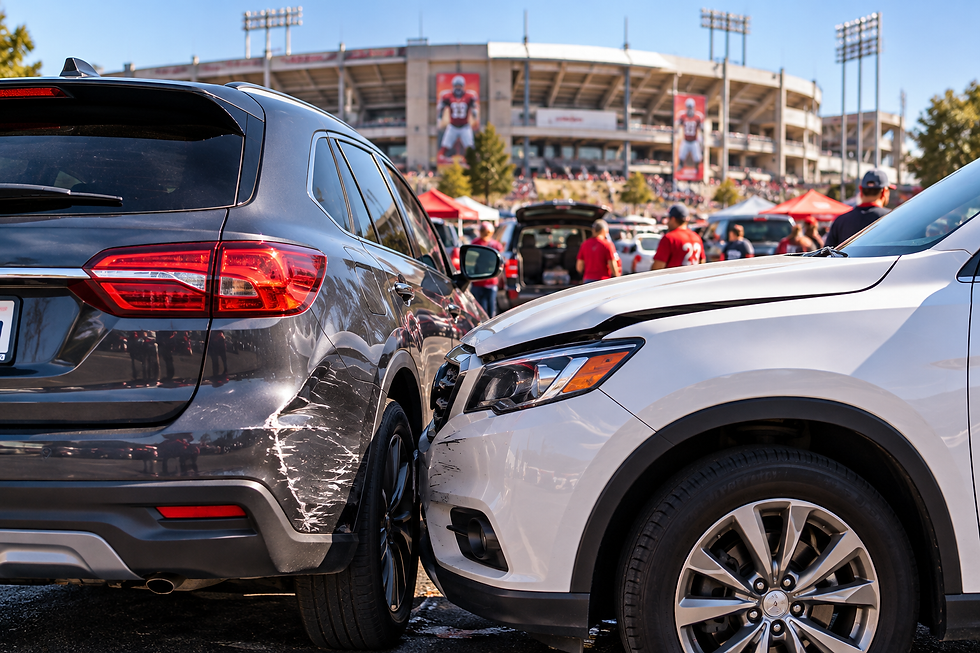
Be polite, but don't argue about who caused the crash or apologize in a way that sounds like an admission. Fault is decided later using the evidence, so stick to the facts. For tips specific to busy lots, see our guide to parking lot accidents after games and concerts.
Do I have to report a car accident to the police or the DMV in California?
Often, yes. California has two separate reporting rules, and one does not replace the other.
Police or CHP report within 24 hours (injury crashes)
If anyone was injured or killed, Vehicle Code 20008 requires the driver to make a written report to the California Highway Patrol, or to the police department of the city where the crash happened, within 24 hours. When an officer comes to the scene and takes the report, that generally covers it. Property-damage-only crashes don't trigger this rule, but a police report is still useful evidence for your claim.
DMV SR-1 report within 10 days
You must also file Form SR-1 with the California DMV within 10 days if anyone was injured (even slightly) or killed, or if property damage was over $1,000 (Vehicle Code 16000). This applies no matter who was at fault and even if police made a report. Missing the deadline can put your driver's license at risk.
Tip: Modern bumpers with parking sensors and cameras often cost more to repair than drivers expect. Get a professional estimate before deciding the $1,000 threshold doesn't apply to you.
When should I call my insurance company, and what should I say?
Call your insurance company as soon as you safely can, ideally the same day. Most policies require prompt notice, and reporting early starts the clock on the insurer's legal deadlines.
Give the basic facts: date, time, location, vehicles involved, and the other driver's information.
Don't guess. If you're not sure about speed, distance, or whether you're hurt, say so.
If the other driver's insurance company asks for a recorded statement, you can take time to gather your notes first. If you were injured, consider talking to an attorney before you give one.
Write down every claim number, adjuster name, and phone number.
California's Fair Claims Settlement Practices Regulations put insurers on a clock. In general, an insurer must acknowledge your claim within 15 calendar days and accept or deny it within 40 days of receiving proof of claim (10 CCR 2695.5 and 2695.7; see the California Department of Insurance accident guide). If you think an insurer isn't following the rules, the CDI consumer hotline is 1-800-927-4357.
Should I file with my insurance or the other driver's?
If the other driver caused the crash, you can file a third-party claim with their insurance company as a claimant. You can also use your own collision coverage, if you have it, and let your insurer recover the money from the other company. Which route is faster depends on your policy and how clear fault is. California uses pure comparative fault, so even if you share some of the blame, you may still recover a reduced amount.
Do I have to use the body shop my insurance company recommends?
No. California Insurance Code 758.5 says an insurer can't require you to have your car repaired at a specific shop. Insurers can recommend one, but you decide who fixes your vehicle.
Have the car inspected by a shop you trust within the first day or two, even if it still drives. Low-speed hits can damage bumper reinforcements, energy absorbers, radar sensors, cameras, and wheel alignment that you can't see from the outside. A detailed estimate also gives you real numbers for your claim and for the SR-1 decision.
What about a rental car?
If the other driver was at fault, their liability insurance is generally responsible for your reasonable loss of use, which usually means a rental while your car is being repaired. If you're using your own coverage, a rental is paid only if your policy includes rental reimbursement, and it will have daily and total limits. Ask the adjuster to confirm rental approval in writing before you pick up a car.
What deadlines should I put on my calendar?
Right away: call 911 for injuries; stop and exchange information.
Within 24 hours: written report to CHP or police for any injury or fatal crash, if an officer didn't take one (Vehicle Code 20008).
As soon as possible: notify your insurance company (check your policy's notice rules).
Within 10 days: SR-1 to the DMV if anyone was hurt or damage was over $1,000 (Vehicle Code 16000).
Within 15 days of your claim: the insurer must acknowledge it (10 CCR 2695.5).
Within 40 days of proof of claim: the insurer must accept or deny, or explain in writing why it needs more time (10 CCR 2695.7).
2 years: general deadline to file a personal injury lawsuit (Code of Civil Procedure 335.1).
3 years: general deadline to file a lawsuit for vehicle and property damage (Code of Civil Procedure 338).
Lawsuit deadlines can be much shorter in some situations, such as claims against a government agency. Talk to a licensed California attorney if you think you may need to sue.
Top 15 Frequently Asked Questions
Do I have to call the police after a minor car accident in California?
Not always. If no one is hurt and the damage is minor, California does not require a police report at the scene. If anyone is injured or killed, a written report must go to the CHP or city police within 24 hours unless an officer already took one. Calling police is still smart when drivers disagree, someone seems impaired, or the other driver won't share information.
What information do I legally have to exchange after a crash?
Under California Vehicle Code 16025, each driver must exchange their name and current address, driver's license number, vehicle identification number (VIN), the registered owner's address, and proof of insurance, such as the insurance company and policy number. Take a photo of the other driver's license and insurance card so you have an accurate record.
What is an SR-1 form, and do I need to file one?
The SR-1 is the DMV's Report of Traffic Accident Occurring in California. You must file it within 10 days if anyone was injured or killed, or if property damage was over $1,000. It is required no matter who was at fault and even when police took a report. Your insurance agent or attorney can help, but filing is your responsibility.
Should I see a doctor after an accident if I feel fine?
It's a good idea. Some injuries, like whiplash and concussions, don't show symptoms right away. A same-day or next-day checkup creates a medical record tied to the accident, which matters if pain shows up later. If you have severe pain, confusion, or trouble breathing, call 911 or go to the emergency room.
Should I admit fault or apologize at the scene?
Be courteous, but avoid statements like "it was my fault." You may not know everything that caused the crash, such as the other driver's speed or a hidden traffic hazard. Stick to the facts with police and insurance companies, and let the evidence decide fault. In California, responsibility can be shared between drivers.
How soon should I report the accident to my insurance company?
As soon as you safely can, ideally within 24 hours. Most policies require prompt notice, and waiting can create problems with your claim. Reporting early also starts California's claim-handling deadlines, which generally require insurers to acknowledge a claim within 15 days and accept or deny it within 40 days of receiving proof of claim.
Can I file a claim with the other driver's insurance company?
Yes. If the other driver caused the crash, you can file a third-party claim directly with their insurer as a claimant. You'll need their name, insurance company, and policy number, plus photos and any police report number. Some drivers use their own collision coverage instead to get repairs started sooner, and their insurer then seeks repayment from the other company.
What if I was partly at fault for the accident?
California follows pure comparative fault, set by the California Supreme Court in Li v. Yellow Cab Co. (1975). Your recovery is reduced by your share of fault, but it is not eliminated. For example, if you were found 20% at fault, you could still recover 80% of your damages from the other driver's coverage.
What should I do if the other driver has no insurance?
Get as much information as you can, including their name, driver's license, plate number, and vehicle description, and call police. Then notify your own insurance company. Depending on your policy, uninsured motorist coverage may pay for injuries, and uninsured motorist property damage or collision coverage may help pay for repairs.
What if the other driver leaves the scene?
Don't chase them. Write down the plate number, make, model, color, and direction they went, and ask witnesses for their contact information. Call police right away and report it to your insurer. Leaving the scene of an accident is a crime in California, and your uninsured motorist or collision coverage may help, depending on your policy.
What happens if the body shop finds more damage after repairs start?
It's common. Once a damaged bumper or panel is removed, the shop often finds damage that wasn't visible during the first estimate. The shop documents it with photos and sends a supplemental estimate to the insurance company for approval. This can add time to the repair, so ask your shop to keep you and the adjuster updated.
Who pays for my rental car after an accident?
If the other driver was at fault, their insurer is generally responsible for a reasonable rental while your car is being repaired. If you're using your own coverage, a rental is covered only if your policy includes rental reimbursement, usually with daily and total limits. Get the rental approval and daily limit confirmed in writing before you pick up a car.
How long does an insurance company have to handle my claim in California?
Under California's Fair Claims Settlement Practices Regulations, insurers generally must acknowledge a claim within 15 calendar days and accept or deny it within 40 days after receiving proof of claim. If they need more time, they must tell you in writing why. You can call the California Department of Insurance at 1-800-927-4357 if you think a claim is being mishandled.
How long do I have to file a lawsuit after a car accident in California?
In general, you have two years from the accident to sue for personal injuries (Code of Civil Procedure 335.1) and three years to sue for vehicle or other property damage (Code of Civil Procedure 338). Claims against a government agency have much shorter deadlines. Talk with a licensed California attorney about your specific situation.
What should I keep in my car in case of an accident?
Keep your current insurance card and registration, a pen and paper, and a charged phone for photos. A small flashlight, reflective triangles or flares, and a basic first-aid kit are also helpful. Saving your insurer's claims number and a trusted body shop's number in your phone makes the first hour much easier.
How World Class Collision Can Help
At World Class Collision, we help drivers in Simi Valley, Moorpark, and nearby communities through the repair and insurance process after a crash. We work with all insurance companies, document hidden damage with photos and detailed estimates, and keep you updated along the way. Remember, in California you have the right to choose your own body shop, and our estimates are free. Hablamos Español. Have more questions? Read our auto body and collision repair FAQs.
Been in an accident? Call World Class Collision at (805) 522-8476 or email service@worldclasscollisionsimi.com for a free estimate.
About the Author: Freddie Ledesma is the owner of World Class Collision in Simi Valley, California. He and his team help drivers repair their vehicles and navigate insurance claims after accidents of every size.
Sources
Disclaimer: This article is general information, not legal or insurance advice. Laws and policies change; check with your insurer or a licensed California attorney about your situation.

Comments